
The operational problem
A useful AI conversation can produce decisions, plans, and next actions. But a chat is not an operating system. New sessions start without the full picture, priorities drift, and important context becomes difficult to recover.
With several active businesses, the cost was not only inconvenience. It was repeated thinking, missed handoffs, and too much of the operation depending on what I personally remembered.
What I built
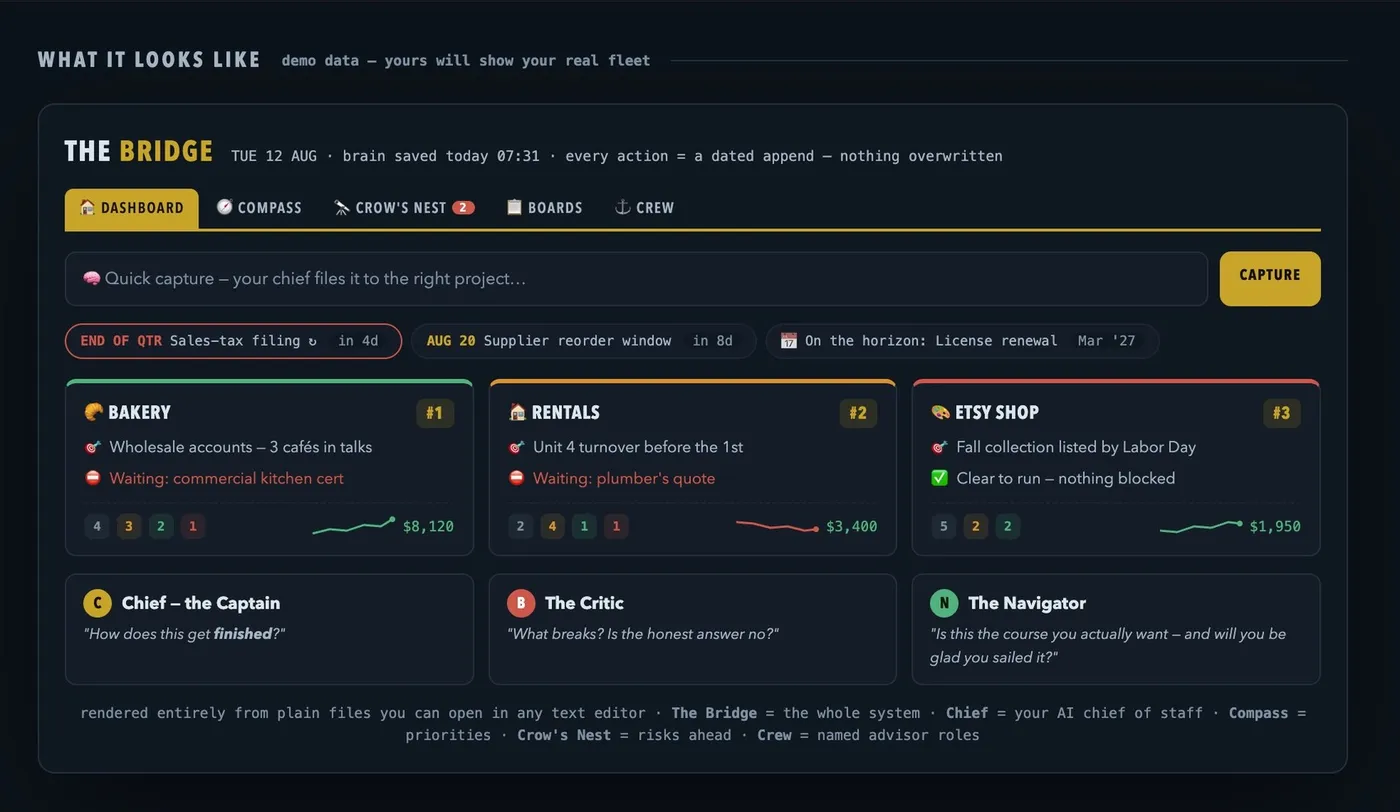
I created a durable file-based operating system for the businesses, then built a visual command layer over it.
The files hold the memory. The interface makes the current state visible. AI helps read, route, update, and act on the system — but the business context does not belong to a single chat session.
What it now makes visible
- Current priorities across each business
- Deadlines and upcoming obligations
- Blocked work and unresolved decisions
- Projects and their next actions
- Durable notes from AI-assisted work
- A repeatable starting point for a fresh AI session
Why it matters to a partner
I would not install this exact system in every business. That would miss the point.
The value is the method: understand where the operation loses context, identify what the owner needs to see, and build a system around the way that business actually runs.
A useful custom system should reduce dependence on memory, eliminate repeated work, and remain understandable after the builder leaves the room.
Ownership principle
The system should serve the business without trapping the business.
That is why CDA Partner builds inside tools and accounts the partner can understand and control. Depth is the service. Dependency is not.